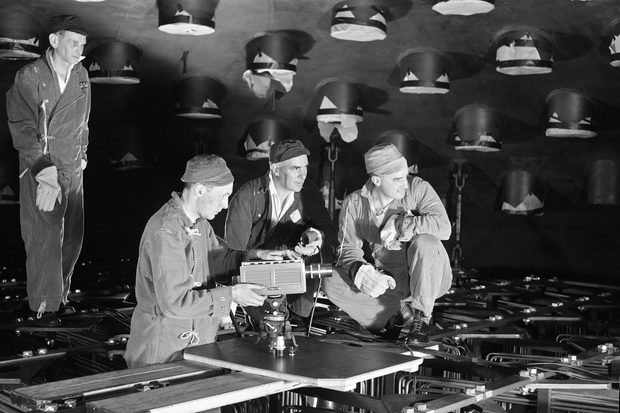
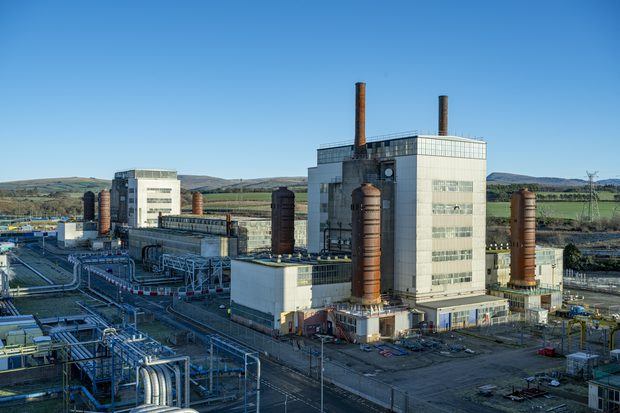
It’s 70 years since Calder Hall, the world’s first commercial-scale nuclear power station, began operating.
The people who worked there in the 1950s were pioneers of a new technology.
Today, we’re pioneers of a different kind.
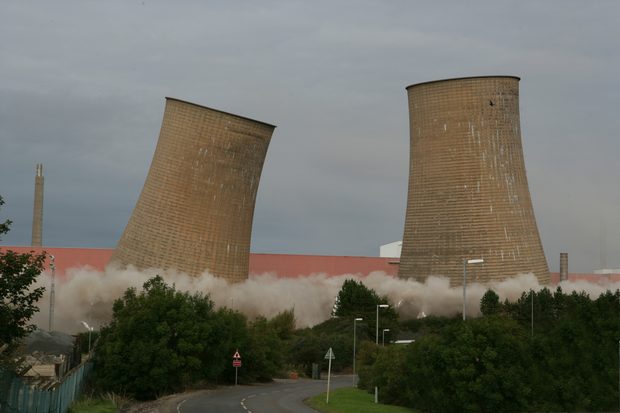
We’re figuring out how to safely and securely decommission and demolish the facility.
That doesn’t sound as glamorous as building and operating it.
But the new methods and approaches we’re trialling could revolutionise our industry, just like those before us did.
It all comes down to risk.
When you think about Sellafield, most people imagine the nuclear risk. The dangers of contamination or radiation. Making sure we’re managing nuclear material safely.
At Calder Hall, that’s no longer the case.
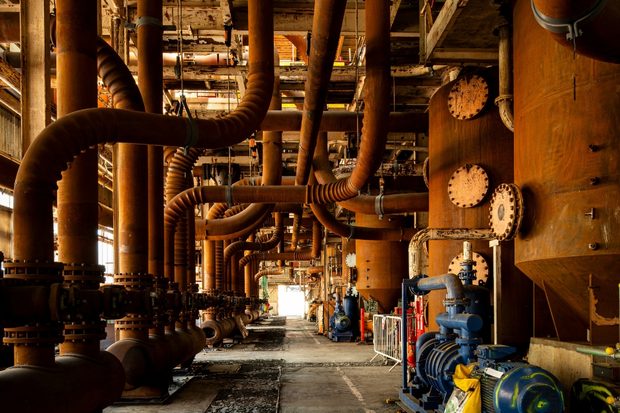
The station stopped generating electricity more than 20 years ago. Its fuel has been removed, and years of decommissioning have steadily reduced the nuclear and radiological hazards.
That means the risks we manage today are mostly conventional.
The same risks you’d get on any construction or demolition site, like the condition of buildings, heavy machinery, lifting operations, working at height, and safely sequencing demolition work.
Thinking about the challenge in this way has allowed us to develop a new approach, known as a risk case.
We did this with input from all the safety specialists and plant personnel who would be using it to ensure it was made for them, with their use in mind.
Looking at the whole risk picture
Traditionally, different types of risk are managed through separate processes.
Nuclear, radiological, environmental, and conventional safety risks have their own assessments.
But looking at them separately can make it harder to see which risks matter most at a particular point in a facility's life.
That’s where the risk case comes in.
The principle is simple: instead of starting with one type of hazard, we bring the important risks together and compare them in one place.
That gives us a clearer picture of what could cause harm, how those risks are being controlled, and which ones deserve the greatest attention.
At Calder Hall, that picture has shown the remaining nuclear risk is now small compared with many of the conventional hazards associated with decommissioning and demolition.
Matching the controls to the job
As the nuclear hazard has reduced, we’ve shown the remaining radiological risks can be managed through appropriate radiation protection arrangements.
That’s helped us to move away from a safety case for an operational power station to arrangements fit for Calder Hall today.
For project teams, the difference can be very practical.
It gives them a clear picture of the risks they need to manage and helps them plan the work around those risks from the outset.
That can mean simpler arrangements, fewer unnecessary steps, and greater use of standard approaches where they are appropriate. All while maintaining the high standards needed to keep people and the environment safe.
Using proven demolition methods
One of the benefits is greater flexibility in how Calder Hall is dismantled.
Where the risk allows, teams can use established techniques and equipment familiar across the demolition industry.
That could mean conventional excavators, demolition sequencing, and construction controls used on non-nuclear projects.
Making decommissioning simpler
The risk case also gives teams a common view of the facility.
It provides a clear overview of the risks and can be easily updated to keep it live.
Project managers, safety specialists, operators, and contractors can all see the same information and understand which risks are driving the work.
Because it can be updated as the facility changes, it can follow Calder Hall through the different stages of decommissioning rather than becoming a static document.
Learning for the future
Calder Hall is the first facility at Sellafield to pilot this approach, but the principle has wider potential.
As more facilities move from operations into decommissioning their risk profiles will also change.
Sellafield has a wide variety of facilities with a broad risk profile that includes non-nuclear risks.
Understanding when controls can change with them could help us make better decisions about where we focus our time, expertise and money.
For me, that is what proportionate decommissioning means: understanding the risks properly, concentrating effort where it makes the biggest difference, and using straightforward, proven approaches when they are the right answer.
Playing our part in wider reforms
The value of this work won’t only be felt at Sellafield.
It aligns with the government’s challenge to the nuclear industry to reduce costs and speed up delivery.
The Nuclear Regulatory Taskforce has called on operators and regulators to move away from disproportionate risk aversion and a focus on process over outcomes.
If we get this right at Calder Hall, we can provide a blueprint for the rest of the UK to follow.
You may also be interested in:
- Sellafield’s Calder Hall turns 70 as decommissioning gathers pace - GOV.UK
- Calder Hall: Decommissioning the world’s first commercial nuclear power station - Case study - GOV.UK
- Decommissioning the world’s first commercial nuclear power station – Cleaning up our nuclear past: faster, safer and sooner
- 70 Years of Nuclear in the UK: The people behind the story
Leave a comment